Digital Marketing: Where We Were, Where We Are, and Where We Are Going
A reflection on six years of change, and the framework that has held up through all of it.
I recently went back through notes and materials from a digital marketing course I completed in 2020. What I found was both humbling and energizing. The strategic bones were solid. The tactical world around them had been completely rebuilt.
This post is my attempt to share that journey honestly, not as a highlight reel, but as a genuine commitment to continuous learning in a field that doesn't slow down for anyone.
Where We Were: The 2020 Foundations
In 2020, the five-step digital marketing process felt comprehensive and forward-looking:
Objectives → Segmentation → Strategy → Execution → Measurement
The framework was built around customer networks, the idea that the modern customer exists in a web of digital relationships, and that brands need to meet them across five dimensions: Access, Engage, Customize, Connect, Collaborate.
It taught us to ask the right questions: Who is your customer, really? What do they value? Where are they reachable? How do you measure what matters?
Those questions haven't changed. What has changed is almost everything else.
In 2020, we were learning to talk about omnichannel as an aspiration. We were debating whether mobile deserved its own strategy or should just be "mobile-first." We were in the early innings of data-driven segmentation, working hard to move beyond basic demographics into psychographics and behavioral patterns. Measurement was evolving rapidly, but still largely built on third-party cookies and multi-touch attribution models.
The "future of marketing" section of that curriculum identified six trends on the horizon: the Addressable Customer, Technodiversity, the Advertising Hollow Middle, Invisible Threats, Two Minds of Marketing, and the Vanishing CMO.
At the time, these felt like predictions. Looking back, they were a map.
Where We Are: Six Years of Transformation
The Framework Held. Everything Around It Changed.
The five-step structure is still exactly right. Objectives before strategy. Segmentation before execution. Measurement tied back to objectives. The logic is sound.
But if I were delivering this content today, nearly every module would look different.
On Objectives: We now have two new objective categories that simply didn't exist as strategic priorities in 2020. AI capability deployment, building AI-powered customer experiences and automating content at scale, is now a legitimate board level goal. And first-party data acquisition has moved from a nice-to-have to a primary strategic imperative, as third-party cookies have been blocked by default across Safari, Firefox, and Brave. If you don't own your customer data, you are increasingly flying blind.
On Segmentation: The shift here is subtle but profound. We've moved from segmenting based on who the customer is to segmenting based on what they intend to do. AI now enables real-time segmentation on purchase intent and content engagement patterns, not just quarterly demographic snapshots. And there's a new psychographic dimension that didn't exist in 2020: AI interaction preference. Some customers embrace AI-powered personalization and chatbots. Others actively distrust them. That's a real and measurable difference that matters for how you reach and communicate with each segment.
On Strategy and the Customer Networks: The five dimensions; Access, Engage, Customize, Connect, Collaborate, have each expanded significantly. "Access" in 2020 meant being findable on Google and mobile. Today it means being present in AI search (ChatGPT, Perplexity, Gemini), on connected TV, and in retail media networks. "Customize" went from aspiration to expectation. Consumers now expect individual-level personalization, and AI has made it technically achievable. "Engage" is now dominated by short-form video in a way that wasn't true in 2020, with average global social media use at roughly two hours and twenty minutes per day.
On Execution: The channel mix has expanded materially. Connected TV advertising, TikTok and short-form video, mature podcast advertising, retail media networks, and AI search placements all represent meaningful new channels. The skill requirements have shifted just as dramatically. Two years ago, "AI prompt engineering" wasn't a job function. Today it's a core competency. The same goes for first-party data strategy, privacy-compliant analytics, and consent management, none of which were formal skill categories in 2020.
One channel-adjacent development worth calling out: AI tools have compressed content production timelines from weeks to hours. This changes the nature of competitive advantage. Speed-to-production is now table stakes. Strategic judgment, brand coherence, and the ability to maintain an authentic voice through AI-assisted output, is where differentiation lives.
On Measurement: This is arguably where the most dramatic structural change has happened. The measurement methodology that dominated from roughly 2015 to 2022; individual-level, cookie-based, multi-touch attribution, is being retired. Marketing Mix Modeling and incrementality testing have made a significant comeback as privacy-safe, aggregate-level alternatives. Last-click attribution, which was already considered a blunt instrument in 2020, is now effectively obsolete.
The deeper shift is this: measurement quality now depends on the quality of your first-party data infrastructure. Consent management, data cleanliness, and identity resolution are prerequisites, not afterthoughts.
The 2020 Predictions, Revisited
The "six faces of the near future" from 2020 have largely arrived, some exactly as described, others in modified form.
The Addressable Customer is now the present tense. Omnichannel personalization across Google, Meta, Amazon, and connected TV is table stakes. What the 2020 framework didn't anticipate was the collision between addressability and privacy regulation; GDPR, CCPA, and India's DPDP Act now constrain how that addressability can actually be used.
Technodiversity accelerated rather than stabilized. TikTok, Threads, Bluesky, and various AI-native platforms have been added to an already complex omnichannel landscape. And the 2020 prediction that "old tech doesn't die" proved exactly right: email, SMS, and direct mail continue to outperform expectations despite constant predictions of their decline.
The Advertising Hollow Middle deepened. The reverse bell curve, premium branded content and programmatic direct response at the extremes, mid-tier display eroding in the middle, has become more pronounced, not less.
The Vanishing CMO didn't vanish. The role was redefined. Today's CMO must navigate privacy law, own first-party data strategy, build meaningful cross-functional relationships with the CIO and CFO, and demonstrate marketing ROI at boardroom standards. The CMOs who couldn't make that transition have struggled. The ones who embraced it have more organizational influence than ever.
Where We Are Going: The Forces That Will Define the Next Phase
Three forces stand out to me as defining the period ahead, and none of them were in the 2020 curriculum.
Generative AI as Production Infrastructure
The question in 2024 and early 2025 was "should we use AI for marketing content?" That question is settled. According to recent industry research, roughly 89% of marketers now use AI tools for content production. The question now is how, specifically, how to maintain brand voice, quality control, and consumer trust while producing at AI-enabled volume.
The Jakob Nielsen 90-9-1 rule, that 1% of community members create content, 9% engage, and 90% observe, takes on new meaning here. AI can serve the 90% at scale. It can personalize content for the full observer majority in ways that were economically impossible before. The strategic imperative for marketers is to reserve human creativity and judgment for the work that actually requires it: the voice, the values, the relationships with your 1%.
The Shift from Search to Synthesis
There's a second force defining this next phase, and it sits right alongside generative AI as production infrastructure: generative AI as a replacement for search itself.
For two decades, the deal between marketers and search engines was simple. You earned a ranking, and the engine sent you a visitor. That deal is breaking down. Answer engines like ChatGPT, Perplexity, and Gemini increasingly resolve the user's question directly inside the AI interface, with no click required. Zero-click search isn't a minor friction point. It's a structural change to how visibility translates into traffic.
The mechanics matter here. A searcher's query is now handed to an AI agent, which synthesizes a response by pulling from a limited set of sources. That agent acts as a gatekeeper, and the available "slots" for being cited are far fewer than the ten blue links of traditional search. Ranking well no longer guarantees you're part of the answer.
Adapting to this requires three coexisting methodologies, not one:
SEO still matters. Page clarity, structured headers, load speed, and backlink quality remain the foundation for traditional search visibility, and traditional search hasn't disappeared.
AEO, or Answer Engine Optimization, is about creating quotable content: direct, filler-free answers written for voice assistants and featured snippets.
GEO, or Generative Engine Optimization, is about creating citable content: machine-readable formats like schema markup, high data density, and clear author credentials that build the kind of verifiable trust an AI agent is more likely to cite.
A few tactics are emerging as best practice across all three:
Answer-first writing. Lead with the direct answer in the first two sentences, in pyramid style, then layer in nuance and supporting data.
Building an omnichannel brand footprint. Mentions across diverse, high-authority channels, YouTube, government and industry sites, established publications, shape both the volume and the quality of citations an AI agent draws from.
Monitoring citation sources. Identifying which AI agents are already citing your brand, and doubling down on the channels they seem to favor.
Forcing a citation. Creating something genuinely difficult to replicate, an interactive tool, original research, a proprietary dataset, that earns a citation because no generic answer can substitute for it.
Writing for semantic similarity. Producing content that aligns with the core "vector" of your business, including the adjacent topics an AI agent is likely to deem relevant to a user's underlying intent, not just the literal keyword.
What this means in practice is that "Access," in the Customer Networks framework, has acquired a new layer. Being found on Google and mobile was the 2020 definition. Being cited inside an AI-generated answer, on top of that, is the 2026 definition. The brands that treat this as a new discipline, not a side effect of good SEO, are the ones who will still be visible when the click disappears.
The Privacy-Personalization Paradox
The third force is the tension between personalization and privacy. This is the central tension of marketing in the mid-2020s, and I don't think it's going away. Consumers simultaneously demand personalized experiences and resist the data collection that makes personalization possible. Survey after survey shows that 70-80% of consumers want brands to know them, and nearly the same percentage say they're uncomfortable with how their data is being used.
The resolution isn't a technical one. It's a trust one. Zero-party data, information that customers willingly and explicitly share in exchange for visible value, is the emerging bridge. Brands that can make the value exchange legible and fair will win the personalization game without the privacy backlash.
What This Means for My Practice
Going back through six-year-old marketing education and doing this kind of systematic update was genuinely useful. Not because the old material was wrong, much of it was right, and the core framework has held up remarkably well, but because it forced me to be specific about what has changed and what hasn't.
The strategic thinking layer, how to set objectives, how to think about segmentation, how to select and test ideas, how to measure against what matters, is durable. It transfers across eras.
The execution layer, which channels, which skills, which tools, which measurement methods, is in constant motion and requires active maintenance.
The commitment I'm making, publicly, is to treat that maintenance as a professional responsibility rather than an occasional catch-up. Marketing moves faster than any single training experience can keep pace with. Staying current requires building the habit of updating, not just the initial investment in learning.
If this post resonates with you, whether you're working through a similar refresh of your own foundations, or you're thinking about how to communicate digital marketing strategy to a colleague or leadership team, I'd genuinely enjoy the conversation.
The five-step process is as sound in 2026 as it was in 2020. What has changed is the tooling, the data environment, and the speed of everything. The judgment layer, setting objectives, segmentation decisions, strategy selection, remains deeply human.
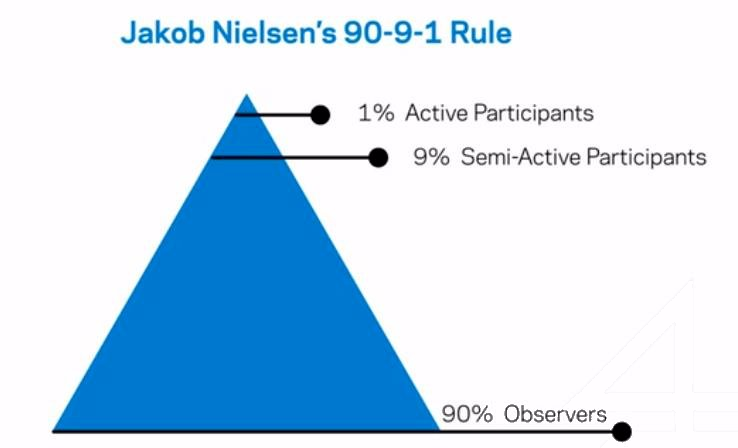
"Source: Jakob Nielsen, Nielsen Norman Group (2006)"