Nobody sees the feet.
On the invisible labor of staying composed, and what the hospitality industry taught me about the most underrated skill in professional life.
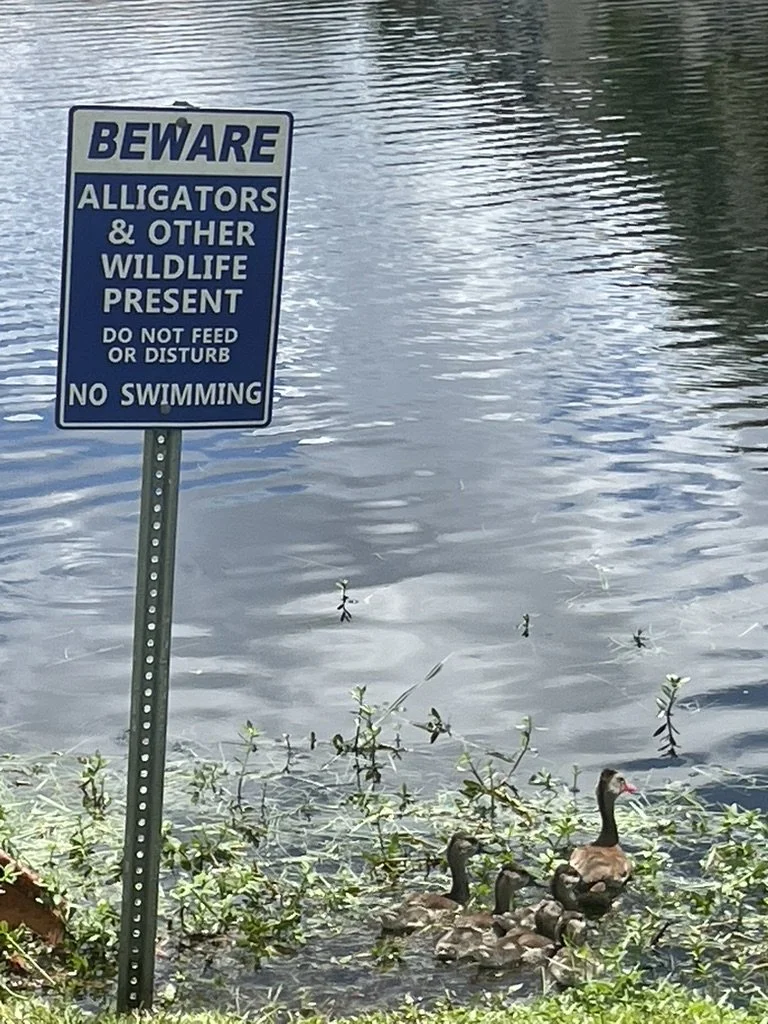
Watch a duck on still water long enough and you'll notice something that bothers the mind the more you think about it. The surface is calm. The duck is calm. Everything looks effortless, almost indifferent. But underneath, hidden from view, those feet are working. Churning. Adjusting constantly to current, wind, and depth. Not frantically. Not recklessly. Exactly as fast as necessary. No more. No less.
That image never left me. I first understood it not in a boardroom, not in a strategy session, but in a hotel kitchen, thirteen years old, scraping plates in the back-of-house at eleven at night. Nobody out front knew. Nobody was supposed to.
I came up through hospitality the old way. Dishwasher. Busboy. Server. Host. Bartender. Each role taught me something different about people, their moods, their needs, the gap between what they said and what they actually wanted. By the time I reached General Manager of a Condé Nast top-50 boutique hotel in the world, I had spent years learning one thing above everything else:
The guest never sees the problem. They only ever see the solution.
That's not deception. That's craft. A water glass refilled before it's empty. A room issue resolved before checkout. A conversation redirected before it becomes a complaint. None of it looks like work from the outside. That's precisely the point.
Let me tell you about the day a B-list celebrity walked into a Beverly Hills Hotel dressed as a cowboy, complete with holstered pistols on both hips.
A guest approached the front desk, visibly unsettled. I walked over, introduced myself calmly, and made one thing clear to our costumed visitor: the guns stay in the holsters. Always. In public. He nodded. I returned to the floor.
Then I watched him do it again, this time on the balcony overlooking the courtyard pool, in full view of guests below.
I called the Beverly Hills Police Department. They arrived quickly and quietly. Their instruction to me was direct: knock on his door, insert the master key on demand, then step away. I did exactly that. They handled the rest, apprehending him on multiple charges, efficiently, without spectacle.
No guest knew. No employee knew. Within the hour, the courtyard was mid-century modern bliss as usual, afternoon light on the pool, the scent of jasmine, the quiet hum of a property at peace with itself.
The duck never stopped gliding.
What I was developing, without having a name for it at the time, was relational intelligence, the ability to read a room, regulate yourself inside it, and respond to another person's emotional reality before they've fully articulated it. It's not charm. It's not warmth. It operates below the surface. And most people have no idea how much of it they're consuming every single day from the professionals around them.
In a hotel, a gun on a balcony tests it. A broken reservation at 2am tests it. An unreasonable guest in front of a lobby full of people tests it. The ones who pass those tests don't do it by feeling less. They do it by having trained themselves to respond rather than react, to paddle, not thrash.
The best professionals don't perform composure. They've built it into the architecture of how they operate.
That's what hospitality, at its best, demands. And it transfers, completely and exactly, into every professional context I've entered since. Pharmaceutical sales. Specialty pharmacy launches. Enterprise business development. Nineteen product launches across five sectors. The industries change. The requirement doesn't.
Every client interaction. Every stakeholder meeting. Every moment of team dysfunction managed quietly, off-stage, before it reaches the people who weren't supposed to see it. Nobody sees the feet. That's the job.
If you're in customer service, in sales, in leadership, in any role where other humans are counting on you, ask yourself honestly: what are you asking of the people around you relationally? Are you conscious of the labor they're spending to stay composed in your presence? Are you developing that capacity in yourself, or assuming it's a personality trait some people have and others don't?
It's not a trait. It's a skill. Built slowly, usually in unglamorous places, by people who learned to love the surface while mastering what moves beneath it.
I learned it scraping dishes. Then carrying them. Then serving from them. Then managing the room they were served in, including the day I had to call the police and make it look like nothing happened at all.
The duck doesn't announce the effort. It just crosses the water.
I highly recommend “Collywobbles” by Moshe Cohen on negotiation, for relational intelligence insights.
Varenna, Italy
Raffaele Villella is a commercial strategy leader with 19 product launches across five sectors in life sciences and a background in hospitality leadership, including General Manager of a Condé Nast top-50 boutique hotel. He writes about relational intelligence, innovation, and cross-disciplinary leadership at tvgstrategy.com.