Performance as a Practice: What Sustained Training Teaches You About Sustained Output
Fitness has been central to who I am for as long as I can remember. Not as a hobby, not as a stress outlet, yet as a practice. A deliberate, structured, non-negotiable commitment to showing up at a certain standard, regardless of what the rest of the day has required.
I train six days a week. Four targeted weight sessions, chest and triceps Monday, back and biceps Wednesday, shoulders Friday, legs Sunday. A 5K run Wednesday. A 26-mile cycle Saturday. Sunday is active recovery with either golf or pickleball, low impact, mobility maintenance. I track sleep through an Oura Ring, monitor training load through a Wahoo computer & watch, and have maintained this structure through graduate school, career transitions, and every other competing demand that has tried to displace it.
I'm not writing about this to document a training schedule. I'm writing about it because the discipline that sustains this practice is identical to the discipline that sustains everything else I do professionally. I have come to believe that understanding one is the fastest path to understanding the other.
The discipline that produces a 100-mile finish is the same discipline that produces consistent strategic output. Physical training didn't teach me that. It confirmed it.
What Actually Happens as We Age and Why It Matters Strategically
The physiology of aging is not a mystery. It is well-documented, measurable, and this is the part most people underweight, manageable with the right kind of deliberate practice.
Beginning around age 30, we lose muscle mass at a rate of 3 to 8 percent per decade. That rate accelerates after 60. Alongside muscle loss, bone density decreases, connective tissue flexibility diminishes, and cartilage becomes more susceptible to stress as its water content declines. These changes combined create the conditions for arthritis, joint stiffness, and the cascade of secondary effects including reduced mobility, reduced energy, reduced capacity for sustained output, which most people associate with aging but few recognize as addressable.
The strategic implication is not about longevity for its own sake. It is about capacity. The ability to sustain high-level cognitive and operational output over a long career, the kind that compounds rather than depletes, is directly related to the physical infrastructure that supports it. Strength, sleep quality, metabolic health, and cardiovascular efficiency are not separate from professional performance. They are its substrate.
This is what strength training past 40 is actually about. Not aesthetics. Not athletic ambition. The maintenance of the physical conditions under which sustained output is possible.
Strength training past 40 is not about aesthetics or athletic ambition. It is about maintaining the physical conditions under which sustained output is possible.
What a Consistent Strength Practice Actually Produces
The benefits of consistent strength training are well-documented across the research literature. For an audience primarily interested in professional performance rather than athletic performance, the most relevant are these:
• Increased bone density — reducing the risk of fractures and the associated recovery time that removes high performers from operation
• Reversal of age-related muscle loss — maintaining the physical capacity for sustained physical and cognitive output
• Improved joint health and flexibility — reducing the chronic pain that degrades concentration, sleep quality, and mood over time
• Better glucose control and metabolic health — directly affecting energy levels, cognitive clarity, and sustained focus
• Improved sleep architecture — the single most underrated performance variable in professional settings
• Reduced cardiovascular risk — the long-lead indicator that most people ignore until it becomes urgent
• Improved cognitive function — the mechanism by which physical training produces better thinking, not just better health
• Increased energy levels and endorphin release — the daily return on the training investment that makes the rest of the day more productive
What this list describes, is not a health optimization bro program. It is a performance infrastructure of the physical conditions under which a person can sustain high-level output across a long career without the diminishing returns that most people accept as inevitable.
Why the Discipline Transfers
The connection between physical training discipline and professional sustained output is not metaphorical. It is structural.
A six-day training split requires the same capabilities that sustained strategic work requires: the ability to show up at a defined standard on a defined schedule regardless of how you feel, the capacity to distinguish between productive discomfort and genuine injury, the discipline to build systematically over time rather than optimizing for any single session, and the recovery intelligence to know when rest is part of the program rather than a departure from it.
The Oura Ring data I track each morning is the same kind of leading indicator I track in any analytical context, not because a sleep score determines whether I train, but because understanding the relationship between recovery quality and performance output requires data, not intuition. The same discipline that makes me a better analyst makes me a more intelligent athlete. And vice versa.
In 2022 I finished Unbound Gravel 100 miles through the Flint Hills of Kansas, unsupported beyond what my tribe carried for me. That finish didn't happen because I was exceptionally talented or unusually tough. It happened because the training structure that preceded it was deliberate, consistent, and built around the principle that performance is a practice, not a gift. The same is true of the professional output I have sustained across four industries over three decades.
The chapters were different each time. The discipline underneath them was the same.
Performance is a practice, not a gift. The discipline that produces a 350-mile finish is identical in structure to the discipline that produces consistent strategic output across a long career.
What This Requires in Practice
The training structure is not complicated. Two strength sessions per week is the minimum effective dose for maintaining the benefits described above. Four is the structure I have found most sustainable for my goals and recovery capacity. The specific program matters less than the consistency, a moderate program executed with discipline over years produces dramatically better outcomes than an optimal program executed sporadically.
A few principles that have proven durable across years of training and significant life variation:
• Strength training becomes more important, not less, as you age — the 3 to 8 percent per decade muscle loss rate is not a suggestion, it is a physiological reality that a training program directly addresses
• Recovery is part of the program — active recovery on rest days (low-impact movement, mobility work) maintains adaptation without accumulating fatigue that degrades both training quality and professional output
• Sleep is the most important recovery variable — eight hours tracked and optimized through an Oura Ring is not a luxury, it is the foundation on which everything else is built
• Postural work is underinvested in most training programs — upper back strength, scapular stability, and hip mobility are the specific areas where age-related decline most directly affects professional posture and presence
• Hydration and nutrition are not separate from training — they are the operational infrastructure that makes training adaptation possible
None of this requires exceptional athletic talent. It requires the same thing that sustained professional output requires: showing up, doing the work, and trusting that the compound interest of consistent practice produces outcomes that no single exceptional effort can replicate.
Stay Active To Be Grounded
The title question, why do people become less active as they age, has a simple answer: because the discipline required to stay active has to compete with an increasing number of legitimate demands on time, energy, and attention. The career accelerates. The family expands. The obligations multiply. The training session is the easiest thing to cancel.
What I have found, across thirty years of consistent training through every version of that competing demand, is that the training session is also the thing most worth protecting. Not because physical performance is the goal, but because the discipline of protecting it is the same discipline that produces everything else worth protecting.
Performance is a practice. It does not happen by accident. It does not happen sporadically. It compounds, over time, through the daily decision to show up at a defined standard regardless of what else the day has required.
The discipline of showing up to train is the same discipline that produces everything else worth protecting. It compounds, over time, through the daily decision to show up at a defined standard regardless of what else the day has required.
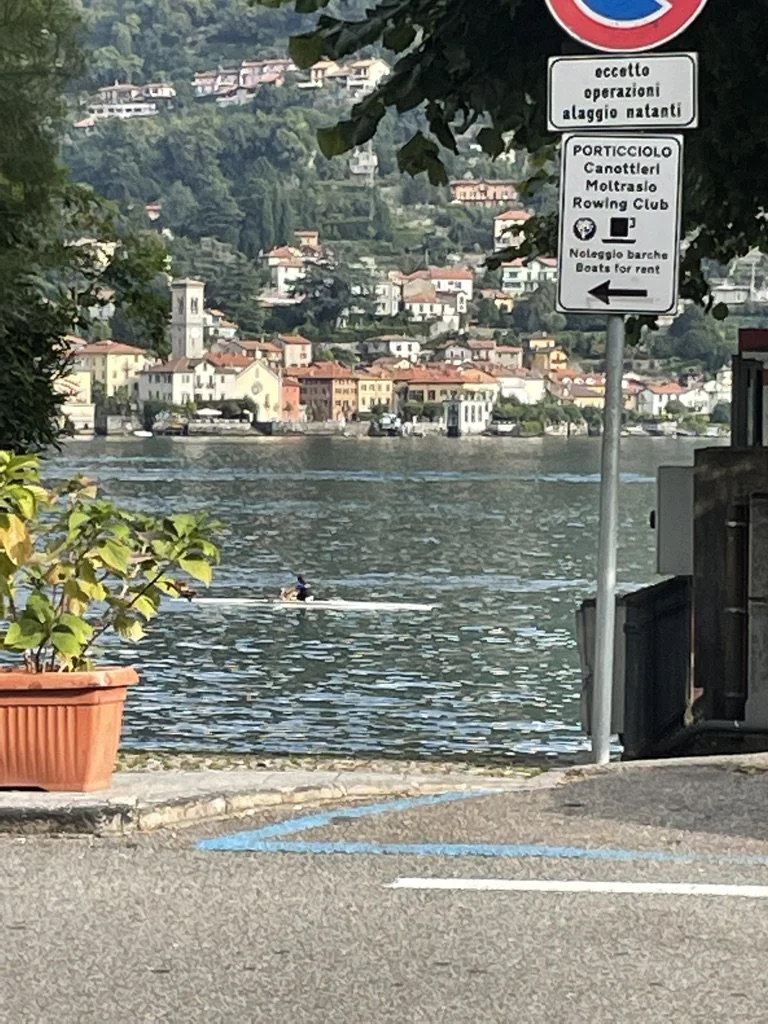
Stay active, to be grounded.